A Thoughtful Guide to Beginner Floral Workshops
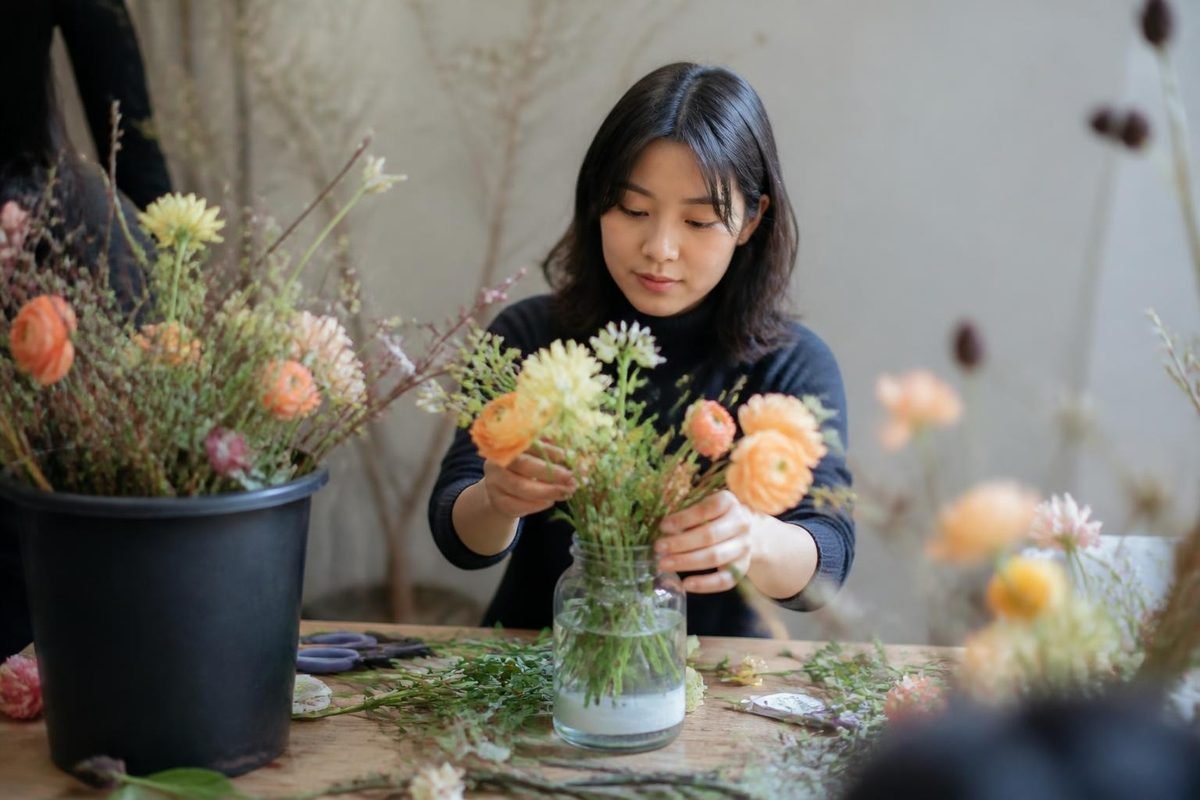
A beginner floral workshop can be more sustainable by using flowers that are in season nearby, reusable equipment and an arrangement people can complete without much experience. Keep attendance small enough for personal guidance, and decide in advance how to handle leftover stems, packaging and water.
Pick a project people can finish
Choose one arrangement that fits the time available. A small vase design is a useful starting point: participants can practise cutting stems, judging proportion and choosing where flowers go without needing a complex frame. Set aside time for a short demonstration, hands on work, questions and tidying up, since each part is needed for a calm session.
Invite participants to bring a clean jar or vase if they already have one, and provide a few extras for anyone who does not. A container with a narrow opening can help keep stems in position, which may remove the need for additional supports.
Send practical details before the workshop so people know what to expect. Include the session length, anything they should bring and how to access the venue. Arrange tables at a comfortable height and leave enough space for people to move between seats; this makes cutting and placing flowers easier.
Choose supplies thoughtfully
Seek out flowers and foliage that are in season in your area, and ask growers or suppliers how they are cultivated. What is available changes with location and season, so be ready to adjust the varieties. Sturdy flowers, smaller blooms and foliage offer a useful range of shapes and textures for new arrangers to explore.
Measure out a sensible amount of material for each person rather than relying on a large surplus. Extra stems can be shared at the end. Gather clean jars or reusable vases, sharp and clean floral snips to share, buckets for keeping flowers in water, reusable cloths for spills, and separate containers for plant scraps and other rubbish.
Avoid single use floral foam. In a small vase, stems can often support one another and hold the design in place. Limit packaging, and favour supplies that can be brought out again for a future class. Reusing materials reduces waste without making the activity harder.
Show the basics, then let people try
First demonstrate how to strip leaves that would end up below the waterline and how to trim stems to fit each vessel. Show everyone how to handle the snips safely, then give them time to practise. A handful of clear instructions is easier to follow than a lengthy rule list.
Suggest starting with foliage, then placing flowers at varied heights. Move around to answer questions and offer help, but avoid fixing every decision for participants. Beginners often learn by shifting a stem and seeing how its position changes the arrangement.
Before people leave, explain simple flower care: keep the water clean, replace it regularly and place the vase away from direct heat. Put suitable plant scraps into compost if an appropriate facility is available. Sort everything else using local waste guidance, since accepted materials differ by area.
Plan for common questions
How large should the group be?
Set attendance at a level that gives you time to reach everyone during the practice period. Keeping numbers low matters especially if you are leading the workshop on your own.
How can the design work with few local varieties?
Build the arrangement around what is available rather than insisting on particular flowers. A small selection can still look engaging when participants pay attention to height and shape.
How should extra stems be used?
Offer usable flowers to participants or put them to another use soon, while they are still fresh. Compost suitable plant material if a local facility accepts it.
Take a look at https://taczow.pl/en/jak-zorganizowac-prezent-niespodzianke-dla-kogos-w/